By Admin
Contamination can arise at any point during the manufacturing process. In pharmaceutical production, however, the consequences can be especially severe. Understanding where contamination originates, how to respond when it occurs, and how to prevent it is critical to maintaining product safety and compliance.
How Contamination Occurs in Pharmaceutical Production
Pharmaceutical contamination often stems from lapses in microbiological control practices. Microbiology laboratories are highly controlled environments where personnel handle a wide range of chemical and biological materials. In some cases, these substances may be pathogenic or even radioactive, depending on the scope of work.
Analysis of FDA Enforcement Reports has shown that inadequate microbiology practices are a leading cause of unidentified microbial contamination in both sterile and non-sterile drug recalls. This highlights the importance of strict adherence to established protocols within laboratory and production environments. Maintaining these standards is essential not only for product integrity but also for the safety of employees.
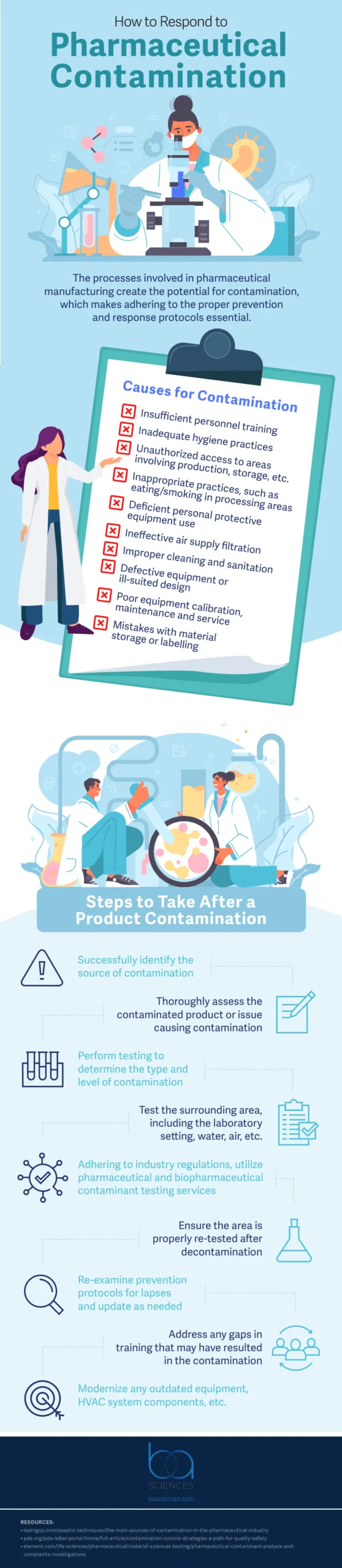
When protocols are not properly followed, contaminants can enter the production stream. These issues may result from poor equipment or facility design, gaps in employee training, improper material storage, ineffective air filtration, or cross-contamination between processes.
For example, personnel involved in manufacturing or quality control can unintentionally introduce contaminants. This may occur through improper laboratory behavior, such as eating, drinking, or using tobacco in restricted areas. Contamination can also result from inadequate use of personal protective equipment or poor hygiene practices.
Responding to Contamination Events
When contamination is detected, immediate action is necessary. Comprehensive pharmaceutical testing must be conducted to identify the source of the issue. To ensure compliance with regulatory standards, pharmaceutical and biopharmaceutical contaminant testing services are often used.
Once the root cause is identified, corrective actions should be taken, followed by thorough decontamination of the affected area. Additional testing is then required to confirm that the environment has been restored to a safe and sterile condition.
Strengthening Prevention Measures
Preventing contamination is the most effective way to protect both products and operations. After any contamination event, existing protocols should be reviewed and updated to address any weaknesses. This may involve repairing or replacing faulty equipment, improving material handling procedures, or upgrading facility systems such as ventilation and air filtration.
Ongoing evaluation and refinement of prevention strategies are essential. By continuously improving processes and reinforcing proper practices among personnel, organizations can reduce risk and maintain higher standards of safety and quality in pharmaceutical manufacturing.