By Admin
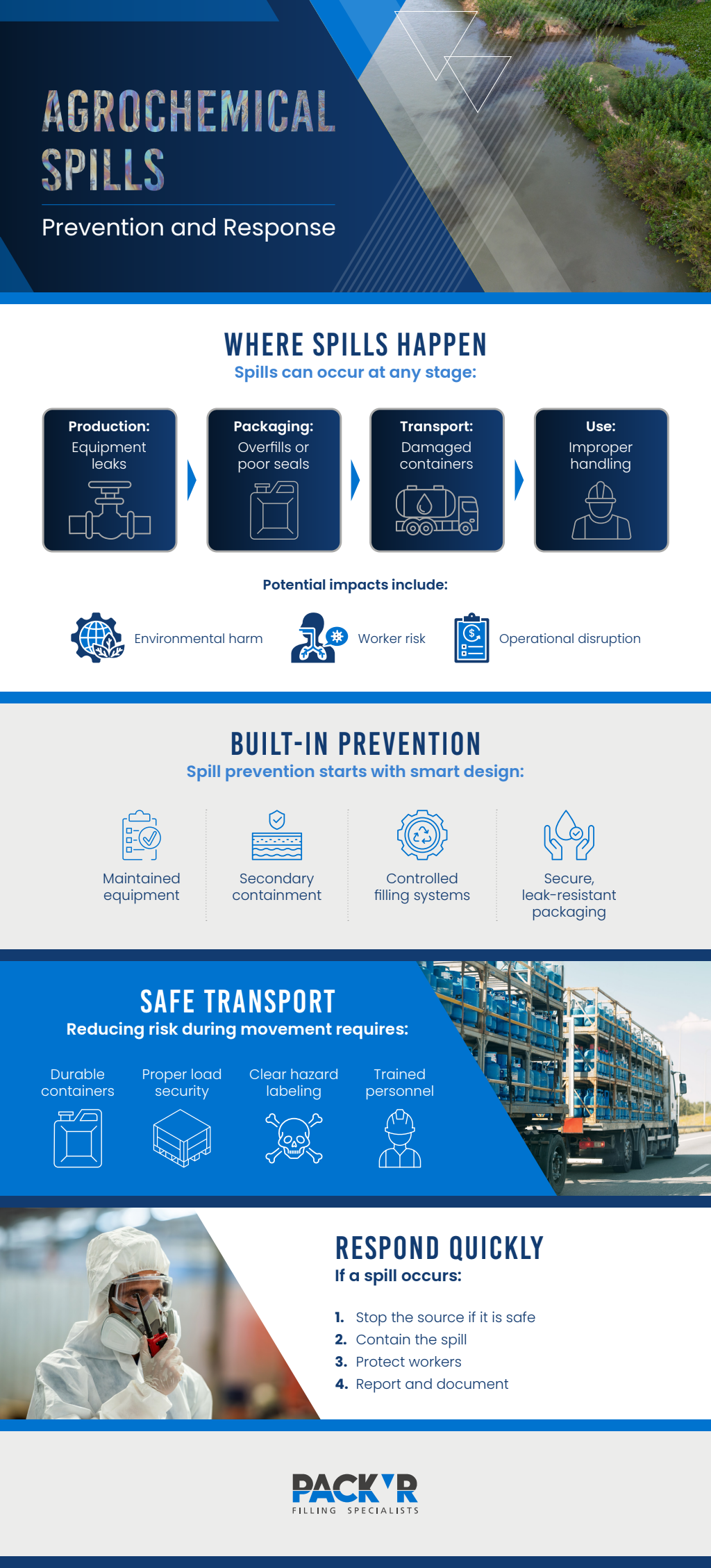
Agrochemicals are essential to modern agriculture, but handling them safely requires careful coordination across every stage of the product lifecycle. From manufacturing and packaging to transport and application, each step introduces potential risks. When spills occur, the impact often extends beyond immediate cleanup, affecting operations, compliance, and environmental responsibility. Reducing these risks starts with a proactive, system-wide approach to safety.
Addressing Risk Before It Escalates
Not all spill risks are obvious. Small leaks or repeated minor releases can accumulate over time, leading to equipment degradation, contaminated surfaces, and unsafe working conditions. These issues may develop gradually, making them easy to overlook until they begin to affect productivity or require costly intervention. Preventative measures that identify and address vulnerabilities early help limit these long-term impacts.
Maintaining Control Across Complex Supply Chains
Agrochemicals often move through multiple facilities and partners before reaching their end use. Each transfer point introduces variability, from differences in equipment to inconsistent handling practices. Establishing clear standards and ensuring compatibility across systems helps maintain control throughout the process. Reliable packaging and consistent filling operations also reduce the likelihood of errors during these transitions.
The Role of Packaging and Equipment Design
Packaging plays a direct role in spill prevention. Containers that are difficult to handle or not suited for automated processes can increase the risk of tipping, dropping, or improper connections. Well-designed packaging, on the other hand, supports stability, ease of use, and compatibility with handling systems. When paired with precise filling equipment, it reduces manual handling and helps maintain consistency across operations.
Supporting Safety Through Training and Communication
Even the most effective systems depend on the people using them. Proper training ensures that employees understand how to operate equipment safely and recognize early signs of potential issues. Clear labeling, accessible documentation, and ongoing communication help reinforce best practices, especially during transport and storage.
Preparing for Unexpected Events
While prevention is critical, preparedness is equally important. Having established response procedures allows teams to act quickly when incidents occur, minimizing disruption and reducing potential harm. Integrating these plans into daily operations and reinforcing them through regular reviews helps ensure they remain effective.
A Continuous Approach to Spill Prevention
Spill prevention is not a one-time effort. It requires ongoing attention to design, process, and training. Organizations that treat it as a continuous process are better positioned to maintain safe operations, protect their workforce, and support long-term environmental stewardship.
For a deeper look at how engineered processes and packaging solutions support safer agrochemical handling, check the resource below to expand on these concepts. For more on this, check out the accompanying resource from supplier of net weight fillers, PACKR.