By Admin
Harvest is only the beginning of a grain crop’s journey. Long after the combine leaves the field, grain remains vulnerable to loss that can quietly reduce its value before it ever reaches the market. For growers, processors, and handlers, these post-harvest losses translate into reduced returns and unnecessary waste. Preserving grain quality requires a clear focus on what happens after harvest and a commitment to managing each step that follows with care.
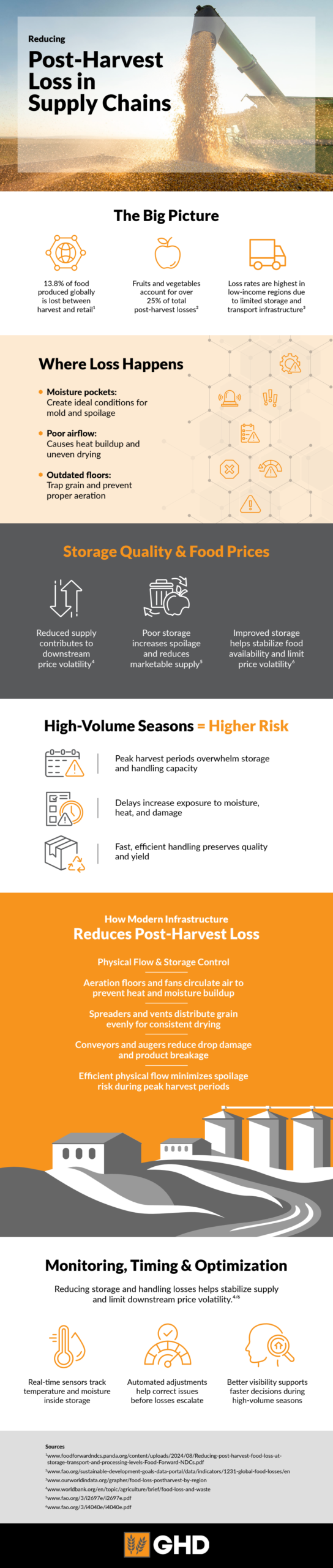
Losses can occur at multiple points throughout the post-harvest process. Grain may suffer damage during transportation if it is rushed or poorly managed. Storage issues can arise when moisture levels are too high or airflow is inadequate, leading to spoilage or quality degradation. Handling systems that place excessive stress on grain can also cause cracking and breakage, lowering the overall marketability of the crop. Addressing these risks starts with understanding where vulnerabilities exist and taking steps to reduce them.
Storage conditions are one of the most important factors in protecting grain quality over time. Facilities that promote consistent airflow help prevent heat buildup and moisture accumulation, both of which create ideal conditions for mold and spoilage. Maintaining stable temperatures within storage structures allows grain to retain its condition for longer periods, giving operators more flexibility in timing sales or transport. Well-managed storage turns grain into a reliable asset rather than a source of ongoing concern.
Grain handling systems also play a major role in loss prevention. Equipment such as conveyors, augers, and elevators must move grain smoothly and at appropriate speeds. Sudden drops, sharp angles, or overloading can all contribute to physical damage. Selecting grain equipment that matches the scale of the operation and maintaining it properly helps ensure grain moves efficiently without unnecessary stress. A steady, controlled flow protects both grain quality and overall system performance.
Advancements in technology have added new tools to support post-harvest management. Monitoring systems that track temperature and humidity inside storage structures provide valuable insight into changing conditions. Early detection allows operators to respond before minor issues escalate into major losses. Automation can further support consistency by adjusting ventilation or other controls as conditions shift, reducing the need for constant manual oversight.
Preserving grain quality after harvest is a matter of preparation, observation, and responsiveness. By investing in effective storage solutions, reliable handling equipment, and modern monitoring tools, grain managers can significantly reduce loss and protect the value of their crop. Strong post-harvest practices ensure that the effort put into growing the grain is fully realized all the way to its final destination.
For more guidance on improving post-harvest grain management, review the additional resources included with this article.